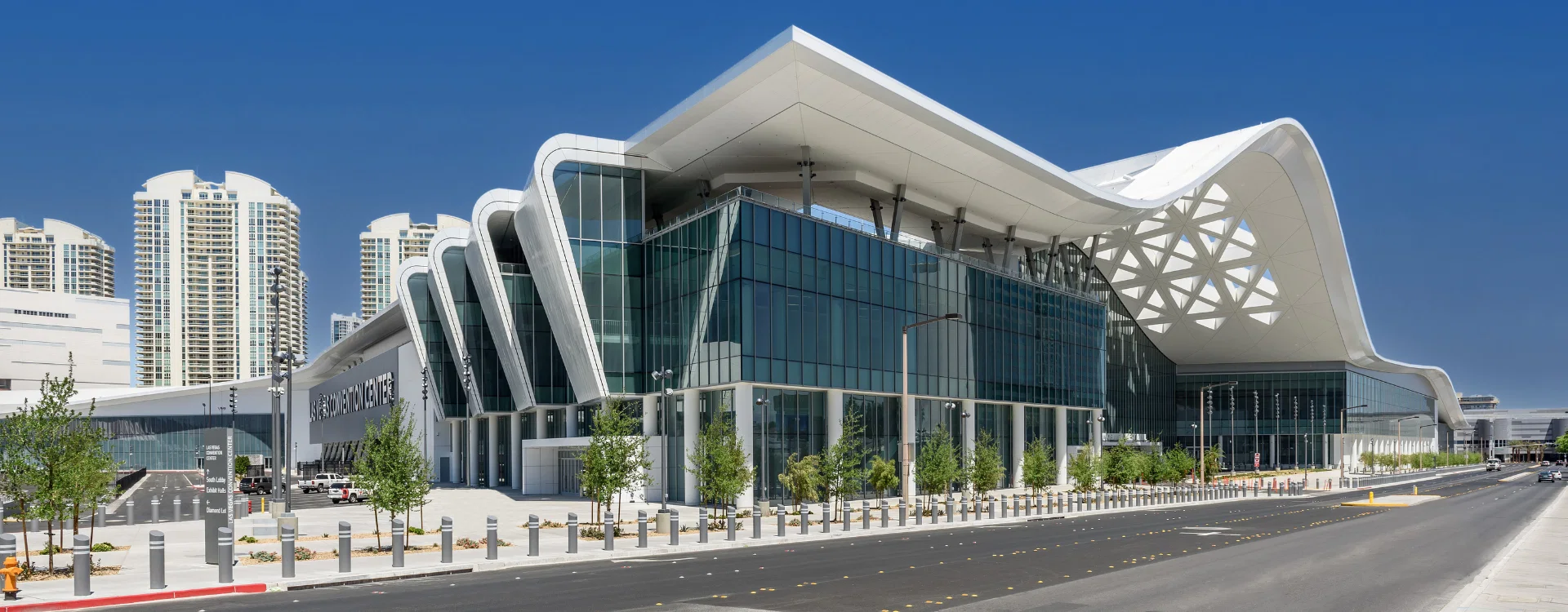
Essential Planning Elements for Las Vegas Convention Center Success
- District-specific operational mapping within the Convention Center District
- Booth concepts scaled for high-volume professional environments
- Timeline development accounting for complex coordination sequences
- Comparative venue analysis across Las Vegas clusters
- Engagement tactics optimized for industry-focused attendee profiles
- Technology integration aligned with convention infrastructure
- Long-term strategy refinement for recurring market participation
Understanding the Convention Center District and Its Operational Implications
The Convention Center District establishes a concentrated zone of activity led by the Las Vegas Convention Center, creating separation from the entertainment-oriented environments prevalent in Strip Central, Strip South, and Strip North areas. This district focus supports infrastructure developed specifically for trade shows, conferences, and exhibitions that require expansive dedicated space and streamlined logistics. Planners benefit from recognizing how this setup influences material handling protocols, attendee circulation patterns, and overall event flow in ways that differ from integrated resort campuses.
Operational details in this district emphasize efficiency for business-centric events where participants arrive with clear professional objectives. Coordination strategies therefore prioritize elements that enhance accessibility and visibility while maintaining alignment with the venue's established patterns of use. This approach helps avoid common pitfalls that arise when assumptions based on other Las Vegas venue types are applied without adjustment to the distinct characteristics of a dedicated convention facility.
Resourceful preparation involves mapping these district attributes against specific exhibition goals to ensure every component from initial concept to final breakdown supports the intended outcomes. Such planning contributes to more effective resource allocation and helps maximize the potential for meaningful industry connections during events hosted at the Las Vegas Convention Center.
- Dedicated infrastructure for large-scale professional events
- Distinct traffic and logistics patterns versus Strip clusters
- Focus on business outcomes over entertainment integration
Developing Booth Strategies Appropriate for Convention Scale and Purpose
Exhibition design for the Las Vegas Convention Center must respond to the scale and professional orientation typical of events in the Convention Center District. Concepts should facilitate efficient navigation while establishing clear brand identity that captures attention amid numerous competing displays. This requires balancing structural elements, visual impact, and functional zones in ways that support both brief interactions and extended consultations depending on the nature of the exhibiting organization.
Coordination during the design phase incorporates considerations for how the physical booth will function within the larger hall environment, including sight lines from primary aisles and integration points for necessary utilities. Effective strategies avoid overcomplication while ensuring the exhibit communicates key messages efficiently to an audience that moves with purpose through the venue. This measured approach helps maintain focus on generating quality engagements rather than temporary visual spectacle.
Planning resources stress iterative review processes that refine designs based on event objectives and anticipated attendee behaviors. By addressing these factors systematically, exhibitors position themselves for stronger performance outcomes that contribute directly to broader marketing and business development initiatives within the Las Vegas market and beyond.
Comparative Venue Analysis Across the Las Vegas Market
The Las Vegas Convention Center occupies a distinctive position when compared against other prominent venues including the Venetian Expo in Strip Central, Fontainebleau Las Vegas, Westgate Las Vegas Resort and Casino, and properties such as Virgin Hotels Las Vegas or Green Valley Ranch Resort and Spa. The Convention Center District delivers a concentrated business environment that contrasts with the amenity-rich but diversely programmed resort campuses found in Strip South or near Lake Las Vegas locations like Hilton Lake Las Vegas Resort and Spa and the Westin Lake Las Vegas Resort and Spa.
These differences extend to logistical considerations, audience composition, and the types of events each location typically supports. District-level differentiation guides planners toward the setting that best matches their exhibition objectives, whether seeking the pure convention focus of the Las Vegas Convention Center or the blended experiences available at integrated resort venues. Understanding these nuances prevents misalignment between chosen location and strategic intent.
Comprehensive analysis incorporates transportation networks, proximity to major accommodations, and the operational rhythms unique to each cluster. This evaluation framework supports more confident decision-making and helps allocate budgets toward elements that will have greatest impact within the selected environment. For organizations participating across multiple Las Vegas venues over time, such knowledge enables consistent brand presentation while adapting to each location's specific demands.
The resulting insights contribute to more sophisticated exhibition programs that evolve based on accumulated experience across the full spectrum of available options in the region.
- Convention Center District versus Strip Central characteristics
- Fontainebleau Las Vegas and Venetian Expo distinctions
- Westgate Las Vegas Resort and Casino operational profile
- Suburban and lake-area alternatives including Green Valley Ranch
- Virgin Hotels Las Vegas and Alexis Park considerations
Structured Coordination Processes for Exhibition Readiness
Successful presence at the Las Vegas Convention Center relies on coordinated preparation spanning concept refinement, design finalization, logistical alignment, and performance optimization. Each stage contains decision points that affect subsequent activities, making sequential planning critical for maintaining momentum and avoiding costly revisions. Authoritative resources provide frameworks that organize these activities into manageable components while preserving flexibility for adjustments based on evolving event details.
Attention to interdependencies between elements such as graphics production timelines, material specifications, and staffing requirements helps create realistic schedules that account for the complexities inherent in major convention participation. This methodical approach reduces uncertainty and supports more predictable outcomes across the full cycle of exhibition activity.
Coordination extends beyond the immediate event to include knowledge capture that informs future participation at the Las Vegas Convention Center or comparable venues. By documenting what proved effective within the Convention Center District environment, organizations build institutional expertise that compounds value over successive events.
The planning discipline applied during these processes ultimately determines the difference between adequate participation and truly impactful market presence that advances organizational objectives.
- Sequential phase management from concept to evaluation
- Interdepartmental alignment for consistent execution
- Documentation practices for continuous improvement
- Risk identification and contingency development
Engagement Optimization Within Convention Center Environments
High attendee volumes at events in the Las Vegas Convention Center necessitate deliberate engagement strategies that work within the time and space constraints of the Convention Center District. Booth configurations should encourage purposeful interaction rather than casual browsing, incorporating demonstration areas, consultation spaces, and information access points calibrated to the professional nature of the audience.
Complementary staffing approaches and presentation protocols enhance the effectiveness of the physical design, creating cohesive experiences that communicate value efficiently. Planning considers how these human elements integrate with the exhibit structure to support lead capture and relationship building in an environment where attendees typically arrive with specific agendas.
Digital enhancements can extend engagement opportunities by providing layered information access or follow-up mechanisms that continue the conversation after initial booth visits. When thoughtfully incorporated, these tools amplify the impact of the in-person experience without overwhelming the core exhibit presence.
The most effective strategies emerge from careful analysis of past performance data combined with current event intelligence, allowing for targeted adjustments that respond to the specific dynamics of each exhibition opportunity at the venue.
Long-Term Strategic Development for Las Vegas Convention Participation
The recurring nature of many events at the Las Vegas Convention Center creates opportunities for progressive refinement of exhibition approaches over multiple cycles. Long-term planning frameworks help organizations move beyond one-off participation toward systematic programs that build cumulative impact within the Convention Center District and the wider Las Vegas market.
This perspective incorporates analysis of how different venue clusters complement one another, allowing for strategic rotation or combined presence that maximizes exposure across varied audience segments. Whether focusing primarily on the Las Vegas Convention Center or incorporating the Venetian Expo, Fontainebleau Las Vegas, and other listed properties, coordinated strategies ensure brand consistency while adapting to each location's distinct attributes.
Ongoing evaluation mechanisms measure outcomes against defined objectives, generating insights that inform subsequent planning cycles. This disciplined approach transforms trade show participation from isolated tactical activities into strategic assets that contribute measurably to broader business development goals.
Market monitoring across all major Las Vegas venues supports timely adaptation to evolving trends in exhibition practices, attendee expectations, and competitive positioning. The resulting programs demonstrate increasing sophistication and effectiveness as organizational knowledge of the regional convention landscape deepens.
- Multi-event strategy architecture
- Performance metric frameworks
- Knowledge transfer between venue types
- Adaptive planning based on market signals
Implementation Considerations and Resource Alignment
Translating plans into coordinated action at the Las Vegas Convention Center requires clear resource alignment across all involved parties. This includes establishing communication protocols that maintain alignment throughout the preparation period and during the event itself. Planning resources emphasize the value of defined responsibilities and milestone checkpoints that keep complex projects on track within the operational parameters of the Convention Center District.
Attention to how different elements interact helps prevent disconnects that could diminish the overall effectiveness of the exhibition. Whether addressing design approvals, scheduling dependencies, or contingency measures, systematic coordination increases the likelihood that the final implementation matches the strategic vision established during initial planning phases.
Post-event review processes capture lessons learned and quantitative results that feed into future planning for the Las Vegas Convention Center and alternative venues throughout the region. This commitment to continuous refinement distinguishes organizations that achieve sustained success in the competitive Las Vegas exhibition environment.
- Clear responsibility mapping
- Milestone tracking methodologies
- Post-event knowledge capture
- Resource optimization techniques
Frequently Asked Questions About Las Vegas Convention Center Planning
Q: What distinguishes the Las Vegas Convention Center from other Las Vegas venues?
Its location within the dedicated Convention Center District creates a business-focused environment with infrastructure optimized for large trade shows, differing from the resort-integrated experiences available in Strip Central, Strip South, and other clusters.
Q: How should exhibitors approach venue selection in the Las Vegas market?
Analysis of district characteristics including the Convention Center District versus Strip-based options such as the Venetian Expo, Fontainebleau Las Vegas, or Westgate Las Vegas Resort and Casino helps match the venue to specific exhibition objectives and target audiences.
Q: What elements are critical when planning booth design for this venue?
Designs must account for scale, professional attendee expectations, efficient traffic flow, and integration with the operational patterns of the Convention Center District to maximize engagement and impact.
Q: When does coordinated planning typically begin for major exhibitions?
Structured preparation commences with sufficient lead time to address all phases of strategy, design, logistics, and refinement while allowing for thorough review against the specific requirements of events at the Las Vegas Convention Center.
Q: How can organizations build long-term success across Las Vegas venues?
Developing frameworks that capture insights from participation at the Las Vegas Convention Center and comparative properties enables progressive improvement, consistent brand application, and increasingly effective resource allocation over time.
Q: What role does district differentiation play in exhibition strategy?
Understanding distinctions between the Convention Center District, Strip clusters, and suburban locations including Green Valley Ranch Resort and Spa or lake-area resorts informs more precise planning that aligns with each venue's unique operational and audience characteristics.