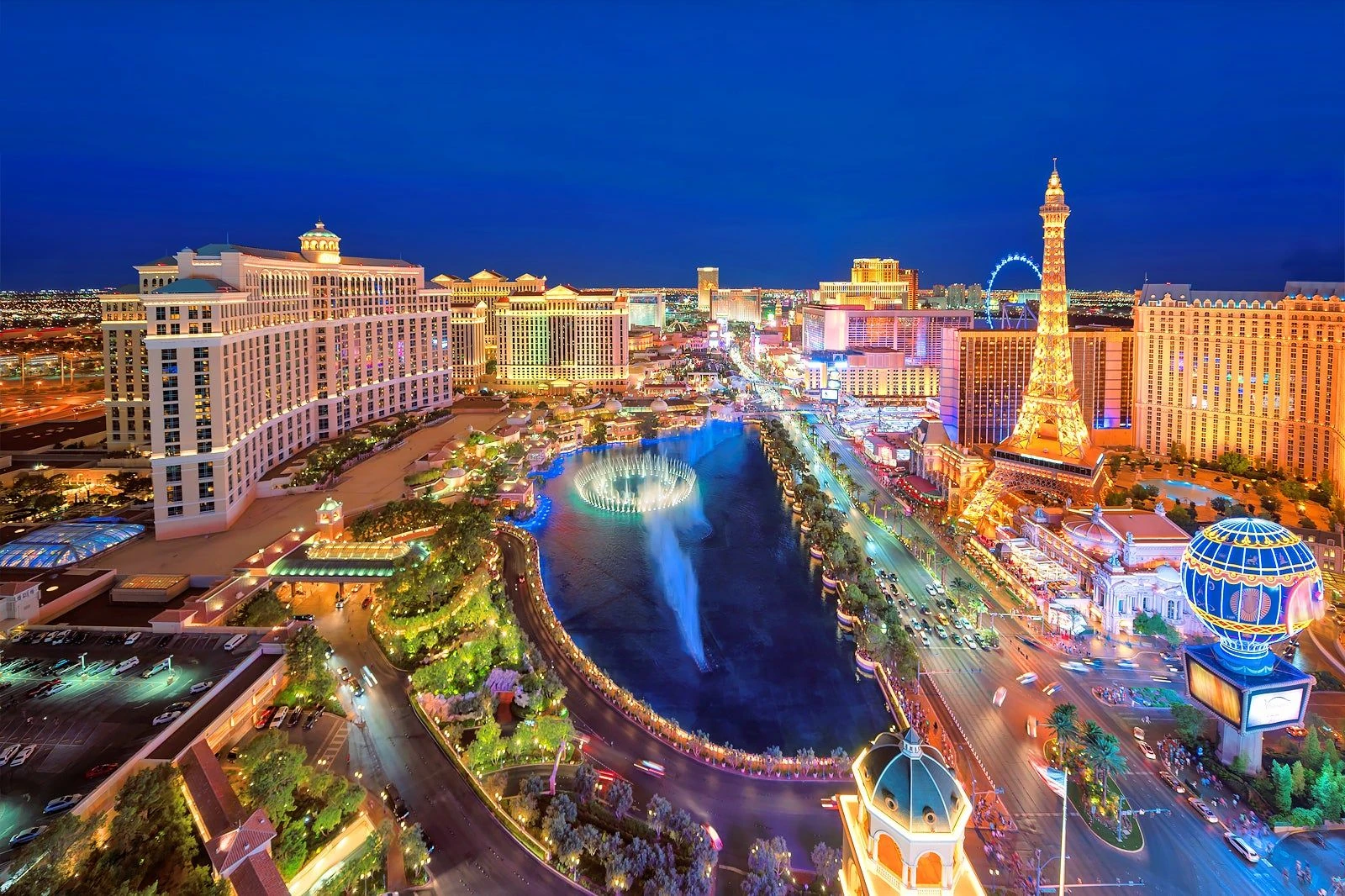
Core Coordination Priorities for Exhibits in Strip Central Las Vegas
- Mapping connections to primary venues including Caesars Forum Conference Center and the Venetian Expo
- Differentiating operational needs from adjacent districts such as Strip South and Convention Center District
- Aligning design elements with the high-visibility environment of central Strip properties
- Developing timelines responsive to the event density documented across Las Vegas convention facilities
- Prioritizing attendee flow considerations unique to the central district's resort interconnections
- Integrating participation with broader demand drivers like Westgate Las Vegas Resort and Fontainebleau Las Vegas
- Refining approaches based on comparisons to areas including Summerlin, Henderson, and Enterprise
The Distinct Operational Profile of Strip Central Las Vegas
Strip Central Las Vegas occupies a concentrated position along the Las Vegas Strip where the pace of conventions and supporting activations creates specific planning demands. This segment maintains a character that blends direct proximity to several documented demand-generating venues with the continuous movement of professionals through resort and meeting spaces. Coordination efforts here focus on the nuances of this density, recognizing that events frequently draw from the same pool of attendees who navigate between multiple sites within short distances.
The district's profile stands apart from neighboring zones through its emphasis on integrated experiences rather than isolated campus-style gatherings. For instance, while the Convention Center District Las Vegas centers on the scale of the Las Vegas Convention Center itself, Strip Central benefits from the spillover and extension potential offered by its central placement. Similarly, distinctions from Paradise NV or Winchester NV become evident in the way central Strip events incorporate hospitality elements more fluidly into the exhibition framework.
Planners addressing this market benefit from examining how the area's layout influences everything from material staging to demonstration scheduling. By treating the central district as a specialized environment within the larger Las Vegas footprint that also encompasses Spring Valley, Enterprise, and Summerlin areas, coordination strategies can achieve greater precision in addressing the documented rhythms of activity.
Primary Demand Drivers and Their Influence on Central Strip Activity
A defined set of major facilities generates the consistent event volume that characterizes Strip Central Las Vegas. Venues such as the Las Vegas Convention Center, the Venetian Expo, Mandalay Bay Convention Center, Caesars Forum Conference Center, and Fontainebleau Las Vegas collectively shape the calendar and audience profiles that exhibitors encounter in the central district. Additional contributions from Westgate Las Vegas Resort & Casino, Alexis Park All Suite Resort, Virgin Hotels Las Vegas, Green Valley Ranch Resort & Spa, and Hilton Lake Las Vegas Resort & Spa extend the reach of demand into supporting activations that frequently intersect with central Strip planning.
These drivers create a foundation for understanding the scale and frequency of opportunities available in the district. Caesars Forum, situated within the central corridor, directly supports conferences that benefit from immediate access to surrounding properties. The Venetian Expo adds substantial exhibition capacity that draws international participants whose movements often include central Strip locations. This combination produces an environment where coordination must account for overlapping schedules and the potential for multi-venue involvement.
When developing participation plans, reference to these established demand sources allows for more accurate forecasting of attendee interests and logistical requirements. The influence of these venues extends beyond single events, supporting recurring patterns that distinguish Strip Central from more isolated markets in areas like Boulder City NV, Primm NV, or the various Summerlin meeting zones. This data-driven perspective ensures that exhibit strategies remain aligned with verifiable market signals rather than generalized assumptions.
- Las Vegas Convention Center as a foundational driver for regional events
- The Venetian Expo supporting large-scale trade show participation
- Caesars Forum Conference Center anchoring central district conferences
- Fontainebleau Las Vegas and Westgate Las Vegas contributing specialized capacity
- Virgin Hotels Las Vegas and related resorts extending the event ecosystem
District-Level Differentiation Across the Las Vegas Landscape
Strip Central Las Vegas presents a differentiated profile when positioned against other segments of the market, including Strip South Las Vegas with its concentration of southern resort properties and Strip North Las Vegas featuring its own distinct development patterns. The central area achieves a balance of accessibility and intensity that supports both flagship exhibits and supplementary activations, setting it apart from the master-planned environments found in Summerlin NV or the community-focused settings of Henderson NV and Green Valley NV.
Comparisons to Paradise NV, Winchester NV, Spring Valley NV, and Enterprise NV further illuminate the central Strip's strengths in pedestrian connectivity and mixed hospitality-convention usage. These adjacent districts each maintain their own operational characteristics, from the suburban logistics of Spring Valley to the planned community infrastructure in Summerlin West or Summerlin South. The central district's position enables planners to leverage its unique placement for campaigns that span multiple zones while maintaining a primary base in central the Strip.
This differentiation extends to contrasts with Downtown Las Vegas NV and the Arts District Las Vegas, where creative and independent event styles predominate. By systematically evaluating these distinctions, coordination resources can tailor recommendations that respect the documented nuances of each area, ensuring that strategies for Strip Central reflect its specific role within the broader Las Vegas convention and exhibition framework that the listed venues sustain.
Such analysis supports more effective resource allocation and expectation setting, allowing exhibitors to capitalize on the central district's advantages while preparing contingencies for the varying conditions found in nearby locations like Anthem, Inspirada, or Lake Las Vegas.
Timeline and Logistical Coordination Specific to the Central District
Successful participation in Strip Central Las Vegas depends on timelines that reflect the documented event density and the scheduling patterns driven by major venues. Early mapping of key milestones relative to facilities like Caesars Forum and the Venetian Expo helps establish buffers for the transitions that characterize the central corridor. This preparation acknowledges the interconnected nature of the district, where one show's conclusion can quickly lead to preparations for the next.
Logistical frameworks for this area prioritize clear sequencing of planning steps without presuming on-site management. Considerations include alignment with the operational windows of the contributing resorts and convention centers, ensuring that all elements of an exhibit program fit within the established rhythms of the central Strip. Comparisons to the longer lead times sometimes available in outlying districts such as Henderson Lake Las Vegas Corridor or Centennial Hills underscore the need for precision in central district scheduling.
Effective coordination incorporates contingency approaches that address potential overlaps in high-activity periods. By focusing on these details, planners create adaptable structures that support objectives across single events or multi-show series, drawing on the full range of demand drivers from the Las Vegas Convention Center through to properties like Virgin Hotels and Westgate.
This methodical approach to timelines distinguishes central Strip planning from less concentrated markets, delivering a framework that supports consistent performance while respecting the verified characteristics of the district.
- Establish milestones anchored to major venue calendars
- Sequence material and design decisions with event density in mind
- Build in review points to accommodate shifts across connected properties
- Align with documented patterns from primary demand drivers
Design and Presentation Strategies for Central Strip Environments
Exhibit designs for Strip Central Las Vegas are most effective when they respond to the upscale, high-visibility context created by the district's resort properties and convention anchors. The central location calls for approaches that balance bold presence with refined execution, ensuring that graphics, layouts, and interactive components engage professionals moving through a landscape defined by major venues such as Caesars Forum and the Venetian Expo.
Coordination of these elements involves reference to the audience profiles associated with the primary demand drivers, from technology-focused events at the Las Vegas Convention Center to specialized conferences at Fontainebleau Las Vegas or Mandalay Bay Convention Center. This informs choices that enhance relevance while maintaining flexibility for potential use across related districts like Paradise or the Arts District.
Modular and scalable concepts often provide practical advantages in the central Strip, allowing adaptation to varying space configurations without compromising brand consistency. Such designs support the operational realities of the district, where quick transitions and multi-day durability are common considerations derived from the event patterns of the listed facilities.
Through this lens, planning resources guide the creation of environments that contribute to measurable outcomes, differentiating the central district's requirements from those in Summerlin Meeting District or more residentially oriented zones.
Developing Integrated Strategies Across the Wider Las Vegas Market
Strip Central Las Vegas serves as an effective hub for strategies that extend into the surrounding market, including connections to the Convention Center District, Downtown Las Vegas, and satellite areas such as Henderson, North Las Vegas, and Sunrise Manor. By anchoring campaigns in the central district's strengths, planners can coordinate participation that leverages the full spectrum of venues from the research sources while maintaining focus on district-specific nuances.
This integrated perspective accounts for the recommended locations and their relative priorities, enabling refined decisions about where to concentrate efforts. For example, central Strip activations can complement programs in Enterprise NV or Whitney NV by capitalizing on the central location's accessibility, creating cohesive narratives across the Las Vegas region.
Longer-term coordination benefits from tracking how demand drivers influence recurring opportunities, allowing for progressive refinement of tactics. The approach treats the central district as one component within a larger taxonomy that includes West of Strip, East of Strip, and Henderson Lake Las Vegas Corridor, fostering plans grounded in the documented sources.
Ultimately, this method supports sustainable exhibition programs that align with the authoritative understanding of Las Vegas market dynamics without introducing unsubstantiated operational claims.
Measuring and Refining Performance in the Central District
Assessment of exhibit outcomes in Strip Central Las Vegas relies on metrics tailored to the district's unique traffic patterns and venue-driven audiences. Coordination frameworks encourage systematic review of engagement data relative to the influences of facilities like the Venetian Expo and Caesars Forum, identifying which elements performed effectively within the central environment.
Refinement processes draw on comparisons with results from neighboring districts, such as the different flow dynamics in Strip South versus the central zone or the varied audience compositions in Summerlin versus central Strip events. This comparative analysis, anchored in the primary demand drivers, supports iterative improvements to design, timing, and integration tactics.
By maintaining this disciplined approach, planners ensure that future participation in Strip Central Las Vegas builds upon verified insights rather than assumptions, contributing to more efficient use of resources across the entire Las Vegas taxonomy of locations.
Frequently Asked Questions on Strip Central Las Vegas Exhibit Planning
Q: What defines Strip Central Las Vegas in relation to the broader market?
It functions as the concentrated middle segment of the Las Vegas Strip, distinguished by its direct connections to multiple demand-driving venues and its balanced integration of resort and convention activities, setting it apart from Strip South, Strip North, Convention Center District, and outlying areas like Summerlin or Henderson.
Q: Which venues primarily influence events and exhibits in this district?
Key demand drivers include the Las Vegas Convention Center, the Venetian Expo, Caesars Forum Conference Center, Fontainebleau Las Vegas, Westgate Las Vegas Resort & Casino, Virgin Hotels Las Vegas, Mandalay Bay Convention Center, and supporting properties such as Alexis Park and Green Valley Ranch.
Q: How does planning for Strip Central differ from adjacent districts?
Central district planning emphasizes pedestrian connectivity, high event density, and smooth resort integration, contrasting with the campus focus of the Convention Center District, the suburban characteristics of Spring Valley or Enterprise, and the distinct profiles of Summerlin or Downtown Las Vegas.
Q: Why is timeline coordination particularly important in this area?
The frequency of events driven by the listed venues requires precise scheduling to manage transitions, avoid conflicts, and align with the operational patterns of the central Strip's interconnected properties.
Q: Can a single exhibit strategy work across multiple Las Vegas districts?
Flexible, modular approaches developed with central Strip as a reference point can be adapted for use in related areas including Paradise, Winchester, Strip South, and Summerlin, provided they account for each district's documented nuances.
Q: What role does authoritative planning play for central Strip participation?
It provides fact-based guidance drawn from primary demand drivers and location taxonomy, supporting coordination that respects operational details and market distinctions without unverifiable claims about local execution.